






|
Regardless of the reason, stress is a way of life in the 21st century. And for
some people, the effects go beyond feelings of anxiety and discomfort. For
these people, stress can mean facing each day ravenously hungry -- and adding
weight gain to their list of worries.
"While the immediate . . . response to acute stress can be a temporary loss of
appetite, more and more we are coming to recognize that for some people,
chronic stress can be tied to an increase in appetite -- and stress-induced
weight gain," says Elissa Epel, PhD, an assistant professor in the department
of psychiatry at the University of California at San Francisco.
The problem, she says, lies within our neuroendocrine system -- a brain-to-body
connection that harkens back to evolutionary times and which helped our distant
ancestors to survive. Though today the source of the stress is more likely to
be an unpaid bill than a saber-toothed tiger, this system still activates a
series of hormones whenever we feel threatened.
"These hormones give us the biochemical strength we need to fight or flee our
stressors," Epel tells WebMD.
The hormones released when we're stressed include adrenalin -- which gives us
instant energy -- along with corticotrophin releasing hormone (CRH) and
cortisol. While high levels of adrenalin and CRH decrease appetite at first,
the effects usually don't last long.
And cortisol works on a different timetable. Its job is to help us replenish our
body after the stress has passed, and it hangs around a lot longer. "It can
remain elevated, increasing your appetite and ultimately driving you to eat
more," says Epel.
While this system works fine when our stress comes in the form of physical
danger -- when we really need to "fight or flee", and then replenish -- it
doesn't serve the same purpose for today's garden-variety stressors.
"Often, our response to stress today is to sit and stew in our frustration and
anger, without expending any of the calories or food stores that we would if we
were physically fighting our way out of stress or danger," says Shawn Talbott,
PhD, an associate professor in the Department of Nutrition at the University of
Utah and author of The Cortisol Connection.
In other words, since your neuro-endocrine system doesn't know you didn't fight
or flee, it still responds to stress with the hormonal signal to replenish
nutritional stores -- which may make you feel hungry.
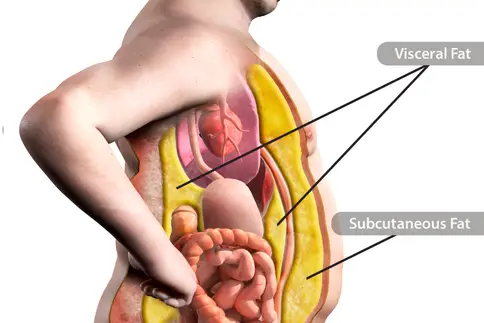
Following those stress signals can lead not only to weight gain, but also the
tendency to store what is called "visceral fat" around the midsection. These
fat cells that lie deep within the abdomen have been linked to an increase in
both diabetes and heart disease.
To further complicate matters, the "fuel" our muscles need during "fight or
flight " is sugar -- one reason we crave carbohydrates when we are stressed,
says endocrinologist Riccardo Perfetti, MD, PhD.
"To move the sugar from our blood to our muscles requires insulin, the hormone
that opens the gates to the cells and lets the sugar in," says Perfetti, who
directs the outpatient diabetes program at Cedars Sinai Medical Center in Los
Angeles. And high levels of sugar and insulin set the stage for the body to
store fat.
"So people who are under stress, metabolically speaking, will gain weight for
that very reason," Perfetti tells WebMD.
Mind Over Matter
As much as we would like to blame all our weight gain on stress, experts say
that eating in response to stress can also be a learned habit -- one that's
merely encouraged by brain chemistry.
"Under stress, there's an impulse to do something, to move, and often, eating
becomes the activity that relieves the stress. It's easy to do and it's
comforting," says David Ginsberg, MD, a psychiatrist and director of the
Behavioral Health Program at New York University Medical Center.
In fact, it may be our bodies' initial response to rising levels of cortisol
that teaches us there is comfort in sugary or starchy foods.
"During the first couple of days following a stressful event, cortisol is giving
you a clue to eat high-carbohydrate foods," Perfetti tells WebMD. "Once you
comply, you quickly learn a behavioral response that you can feel almost
destined to repeat anytime you feel stressed."
Now for the good news: Whether your urge to eat is driven by hormones or habits
or a combination of both, research shows there are ways to interrupt the cycle,
break the stress and stop the weight gain.
Here's what the experts recommend:
1. Exercise.
This is the best stress-buster -- and also happens to be good for you in lots
of other ways. "It not only burns calories, when you move your body, even with
a simple activity such as walking, you begin to produce a cascade of
biochemicals, at least some of which counter the negative effects of stress
hormones -- as well as control insulin and sugar levels," says Talbott.
At the same time, Ginsburg notes that exercising too hard for too long can raise
cortisol levels and actually increase stress. The answer, he says is to choose
an activity you really enjoy doing -- be it an aerobic sport like running or a
calmer activity such as Pilates -- and then keep workouts to a length that
doesn't exhaust you (this could be as little as 20 minutes a day, three to five
days a week).
2. Eat a balanced diet -- and never
skip a meal.
"Eat breakfast -- and try to consume six small rather than three huge meals a
day, with foods from all the food groups," Ginsberg tells WebMD. This helps
keep blood sugar levels steady, which in turn put a damper on insulin
production and eventually reduce cortisol levels -- all helping to control
appetite and weight.
3. Don't lose sleep, over your weight problems or
your stress -- When we don't get enough rest, cortisol levels rise, making us
feel hungry and less satisfied with the food we do eat, Ginsberg says.
4. Devote time to relaxation
-- Because it works much like exercise to produce brain chemicals that counter
the effects of stress, Ginsburg suggests finding the activities that make you
feel relaxed and calm. For some, he says, yoga can do the trick. Others may
prefer meditation techniques or deep breathing.
And don't overlook the relaxing power of cuddling up on a sofa with a good book
or magazine, or even playing your favorite movie on the VCR. "Anything that
makes you feel calm and relaxed will help counter the biochemical effects of
stress," says Talbott.
5. Snack on whole grain, high fiber
foods.
If you just can't ignore those stress-related hunger pangs, try filling your
tummy with foods high in fiber and low in sugar, like oatmeal, whole wheat
bread, or fruits such as pears or plums.
According to Pamela Peeke, MD, MPH, author of Fight Fat After Forty, foods that
are high in sugar and simple carbohydrates -- like white flour, cookies, cake,
white rice, or pasta -- cause insulin levels to rise, which in turn increases
stress hormones and ultimately makes you feel more hungry. But high-fiber,
whole-grain foods -- particularly cereals like oatmeal or multi-grain flakes,
as well as fruits -- help keep insulin levels on a even keel, which can help
control blood sugar levels, and ultimately, hunger, according to Peeke.
6. Avoid caffeine, cigarettes and alcohol
-- According to the American Institute of Stress, cigarettes, as well as
caffeine-laden soft drinks, coffee, tea, and even chocolate, can cause cortisol
levels to rise, stress to increase, blood sugar to drop and hunger to prevail.
The institute also cautions against drinking too much alcohol, which can affect
blood sugar and insulin levels.
7. Take your vitamins
-- A number of medical studies have shown that stress can deplete important
nutrients -- particularly the B complex and C vitamins, and sometimes the
minerals calcium and magnesium.
Because these nutrients are needed to balance the effects of stress hormones
like cortisol, and may even play a role in helping us burn fat, it's important
to keep levels high, Talbott says. While a good diet will help, he says, taking
a high potency multi-vitamin supplement can insure you give your body what it
needs to not only deal with the stress, but also burn fat and lose weight.
And speaking of losing weight, here's one bit of news you may be happy to hear:
Experts say you shouldn't try to go on a strict diet when you're under extreme
or chronic stress.
In one study, published in the Journal of Clinical Nutrition in 2001,
researchers from the University of British Columbia found that severely
limiting calorie intake could kick off a series of biochemical events that
ultimately not only increased stress levels, but could make people feel more
hungry.
The researchers followed 62 women for three days. Of this group, 33 were on a
diet of no more than about 1,500 calories a day, while the other 29 consumed up
to about 2,200 calories daily.
After analyzing urine samples, researchers found that the women who had consumed
the least food had the highest levels of cortisol. Not surprisingly, these same
women also reported more stress during what researchers called "daily
food-related experiences." In short, the more they restricted food intake, the
greater their levels of stress hormones, and, ultimately, the more they wanted
to eat.
If you find yourself chronically stressed out, the experts say, you should do
what you can to decrease your stress levels, then follow a reduced-calorie, yet
balanced, diet to stop the weight gain and lose the extra pounds.
By Colette Bouchez
Reviewed By Kathleen Zelman, MPH, RD, July 25, 2007.
Medically updated July 25, 2007.
|